A Little About Us
This is a local garage door repair outfit, not a franchise desk routing your call somewhere else. When you ring, you reach the people who will be doing the job.
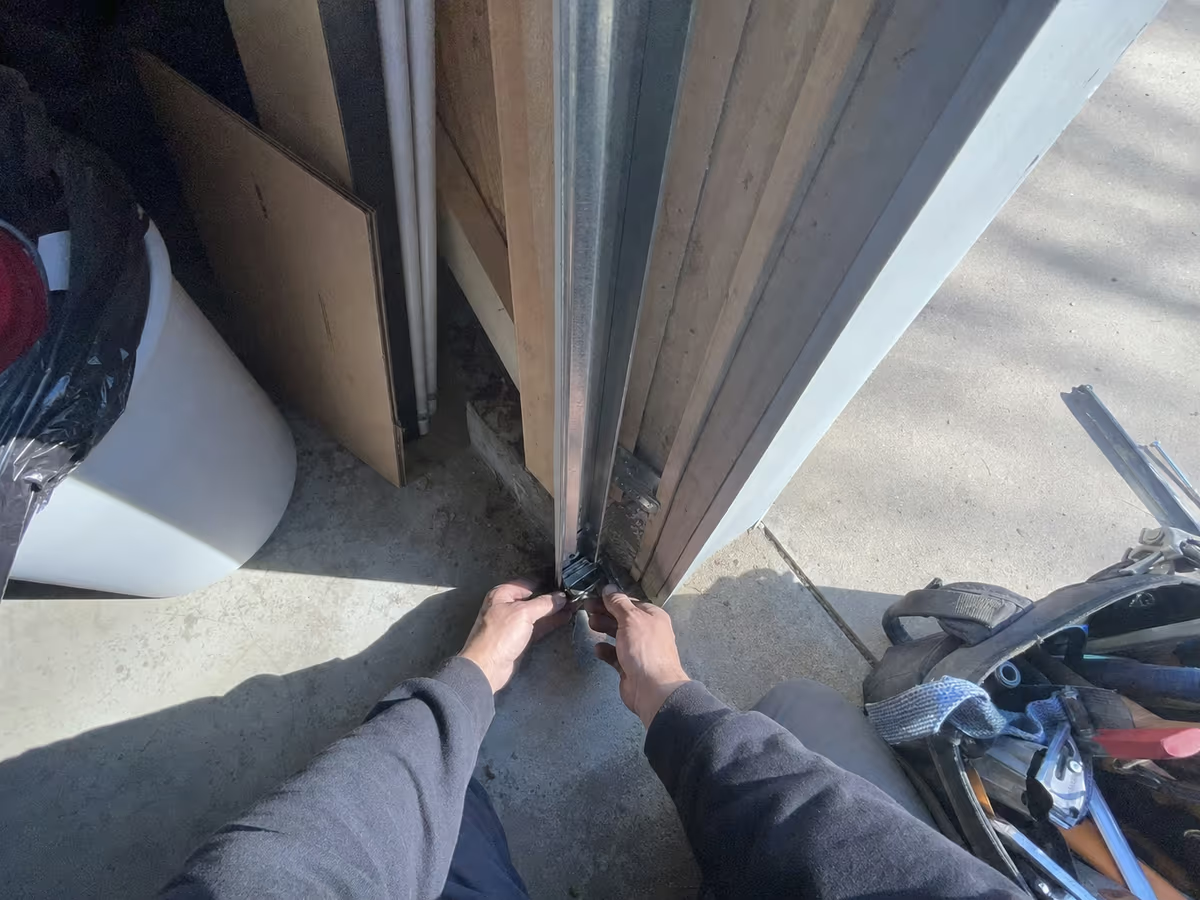
The van shows up with the parts already on it. Torsion springs in the common sizes, cables, drums, bearing plates, rollers, hinges, and opener gear kits and logic boards for the units we see most. The first thing the tech does is pull the emergency release and lift the door by hand to check balance, then measure the spring, wire size, inside diameter, length, and read the track for bends or gouges. After that we test the opener's force settings and the photo-eye alignment. Most calls are done in one visit because the part is twenty feet away instead of on order. If we hit something unusual, like an odd drum or a discontinued board, we say so on the spot instead of stringing you along.
The three calls that fill most days here are a broken torsion spring, an opener that hums or clicks without moving, and a door that has jumped its track. Springs are the loudest and the most common. Opener failures usually come down to a stripped gear, a burned board, or a sensor that got knocked out of line, and we handle those under opener repair. When a roller leaves the rail or a cable unspools off the drum, the door needs to come down and be reset properly, not forced back up. That's off-track repair. We work on LiftMaster, Chamberlain, Genie, Overhead Door, Clopay, and Amarr. What moves the cost on any of these is which spring size your door takes, whether one side or both need replacing, whether the cables and drums took damage when the spring let go, and whether the opener needs a gear kit or a whole board. A spring that broke cleanly on a balanced door is a different job than one that dropped the door and racked the track.
Sacramento Valley garage doors age on a predictable curve. Torsion springs installed with 1990s and 2000s tract construction reach the end of their 10,000-cycle design life after 12–20 years of daily use, and this region's housing wave means large numbers of doors crossing that threshold at once. The pattern we see is dried-out bearings and rollers from summer heat, followed by a broken spring on the first cold snap when steel contracts. Repair is usually the correct call, because a steel slab with a non-insulated or polystyrene core outlives its hardware by decades here without salt or freeze-thaw spalling. We'll tell you when it doesn't pencil out. A 1950s–70s wood panel door with delaminated stiles from wet-winter, dry-summer cycling, an original one-piece tilt-up still in service, or dented steel sections that have racked the track. Those are replacement conversations, not repair ones. Same with any opener made before 1993, since those lack photo-eye reversing sensors and should be replaced outright rather than repaired. You'll hear that from us before we start, not after.
Our service area
We cover Elk Grove and the surrounding towns. If you're in one of these areas and have a garage door problem, call us. We usually get out the same day.
How we decide what to recommend
A garage door is the largest moving object in the house. A tired spring does not fail politely. It lets go, the cable whips, and the door drops. Waiting on a door that shudders or hangs crooked is a safety bet, not a savings plan. Openers built before 1993 lack photo-eye reversing sensors entirely. Those we replace outright. We do not repair a machine that cannot tell a child from the floor.
Most of what we see here is fixable. Sacramento Valley garage doors age on a predictable curve. Torsion springs installed with 1990s and 2000s tract construction reach the end of their 10,000-cycle design life after 12–20 years of daily use. The regional housing wave means many doors cross that line at once. Spring replacement, cable and drum resets, roller and hinge swaps, opener logic board or gear work, section-level repair on steel. That is the usual answer.
The slab outlasts its hardware. Steel doors, non-insulated or polystyrene-core, have no salt air and no freeze-thaw spalling working against them here.
Replacement earns its keep in narrower cases. Delaminated stiles on 1950s–70s wood panel doors, from wet-winter and dry-summer cycling. An original one-piece tilt-up still in service. Dented steel sections that have racked the track.
The local failure sequence is familiar. Summer heat dries bearings and rollers. Then the first cold snap contracts the steel and the spring breaks. Noise in August usually means a callout in December.
Call us at (916) 824-3835. We'll tell you the price before we start. You can also reach us through the contact page if you'd rather send a message.
Call (916) 824-3835